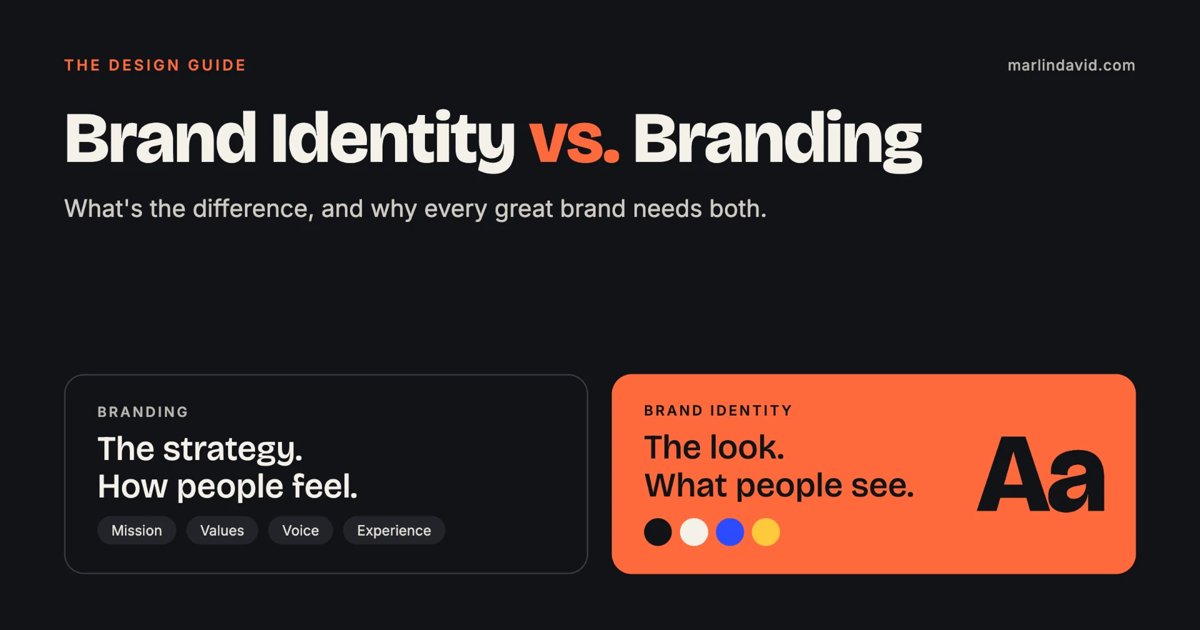
Branding is the ongoing work of shaping how people feel about a business. Brand identity is the visible toolkit, like the logo, colors and fonts, that expresses it. One is the strategy and the other is how that strategy looks. Here's how they differ, how they work together, and what branding is really meant to achieve in graphic design.
What is branding?
Branding is the strategy behind a business: the process of shaping how people perceive it and what they feel when they see its name. It covers the mission, the values, the voice, the promise to customers, and every experience someone has with the business, from a website visit to unboxing a product.
Branding is never finished. It grows with every post, every customer conversation and every piece of work you put out.
What is brand identity?
Brand identity is the visible and tangible side of the brand. It's the set of design elements people can see, hear and recognize: the logo, color palette, typography, imagery style and tone of voice.
If branding is the personality, brand identity is the outfit it wears. A good identity makes the strategy instantly recognizable, even before someone reads a word.
The short answer: branding is why and how a business wants to be perceived. Brand identity is what people actually see.
Brand identity vs. branding at a glance
| Branding | Brand identity | |
|---|---|---|
| What it is | The strategy and process of shaping perception | The visual and verbal elements that express the brand |
| Question it answers | Who are we and why should people care? | How do we look and sound? |
| Examples | Mission, values, positioning, customer experience | Logo, colors, fonts, imagery, tone of voice |
| Timeframe | Ongoing, never finished | Built once, refreshed every few years |
| Who shapes it | Everyone in the business, plus customers | Designers, guided by the strategy |
| Main goal | Trust, loyalty and emotional connection | Recognition and consistency |
The primary goals of branding in graphic design
In graphic design, branding turns a business's strategy into something people can see and remember. A designer working on a brand is usually aiming for six outcomes:
- Recognition. Make the business identifiable at a glance, whether on a sign, a social post or a tiny app icon.
- Differentiation. Stand apart from competitors so the business isn't mistaken for anyone else in its market.
- Consistency. Give every touchpoint the same look and feel, so the brand feels dependable wherever people meet it.
- Emotional connection. Use color, shape and imagery to make people feel something, like calm, energy, luxury or warmth.
- Trust and credibility. A polished, coherent identity signals that the business is professional and worth paying for.
- Communicating values. Show what the business stands for without needing a paragraph of explanation.
When these goals are met, design stops being decoration and starts doing real work: helping people remember, choose and come back. You can see these goals in practice across my featured work.
The core elements of a brand identity
A complete brand identity usually includes:
- Logo. The main mark, plus simpler versions for small spaces like favicons and social profiles.
- Color palette. Two or three main colors and a few supporting ones, each with exact codes so they match everywhere.
- Typography. A heading font and a body font that reflect the brand's personality.
- Imagery style. Rules for photography, illustration and graphics, such as lighting, mood and subject.
- Graphic elements. Patterns, icons, textures and shapes that repeat across materials.
- Tone of voice. How the brand speaks, whether that's playful, bold, warm or refined.
- Brand guidelines. A style guide that pulls it all together so anyone can apply the identity correctly.
Think of it this way: a strong identity lets someone recognize a brand even with the logo covered up.
How to build both, step by step
Strategy comes first, then design. Skipping straight to a logo is the most common mistake small businesses make.
- Define the brand. Write down the mission, values, audience and what makes the business different.
- Study the market. Look at competitors to see what's overused and where there's room to stand out.
- Choose a personality. Pick three to five words that describe how the brand should feel.
- Design the identity. Turn that personality into a logo, palette, typography and imagery style.
- Write the guidelines. Document the rules so the identity stays consistent as the business grows.
- Apply it everywhere. Roll it out across the website, social media, packaging and print.
- Keep branding alive. Review how people respond, and refine the experience over time.
A designer can create a beautiful identity, but only a clear strategy makes it mean something. Learn more about my brand design services.
Frequently asked questions
Is a logo the same as a brand? No. A logo is one part of a brand identity, and the identity is one part of the brand. The brand is the whole impression people have of a business.
What comes first, branding or brand identity? Branding. The strategy decides what the identity needs to express, so it should always come before design.
What is brand image? Brand image is how people actually see a business, which may differ from how the business wants to be seen. Good branding closes that gap.
Can a small business or artist have a brand? Yes. Freelancers, artists and small shops benefit just as much, because a clear identity helps people remember them in a crowded market. You can see how I've shaped my own as an artist in my shop.
How often should a brand identity be updated? Most businesses refresh their identity every few years, usually when the business changes direction or the design starts to feel dated.
Ready to build your brand?
Whether you need a full brand identity or help shaping the strategy behind it, I'd love to hear about your project. Get in touch to start creating a brand people remember. And if you're looking for original art that brings personality to your space or your brand, browse my shop.